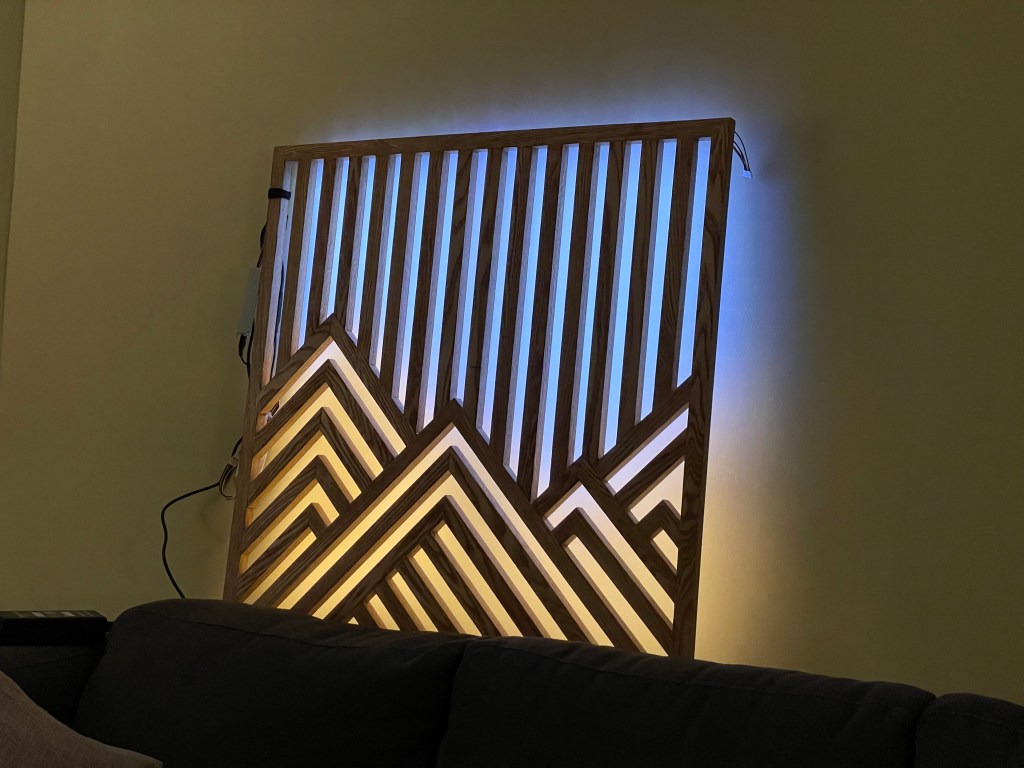
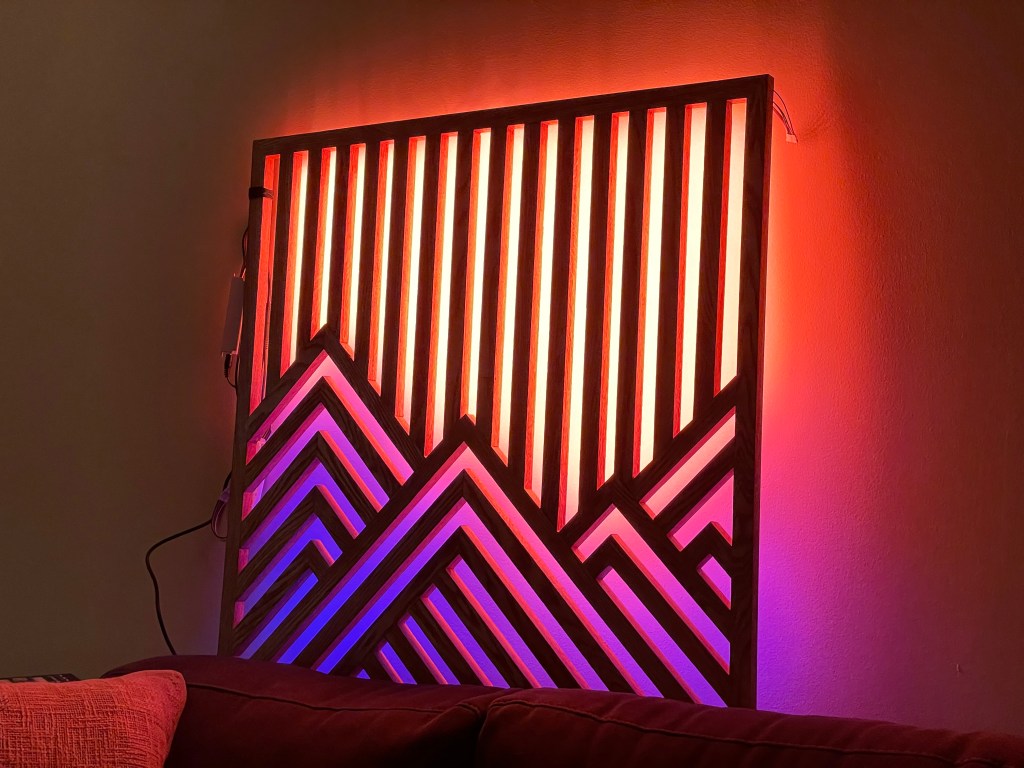
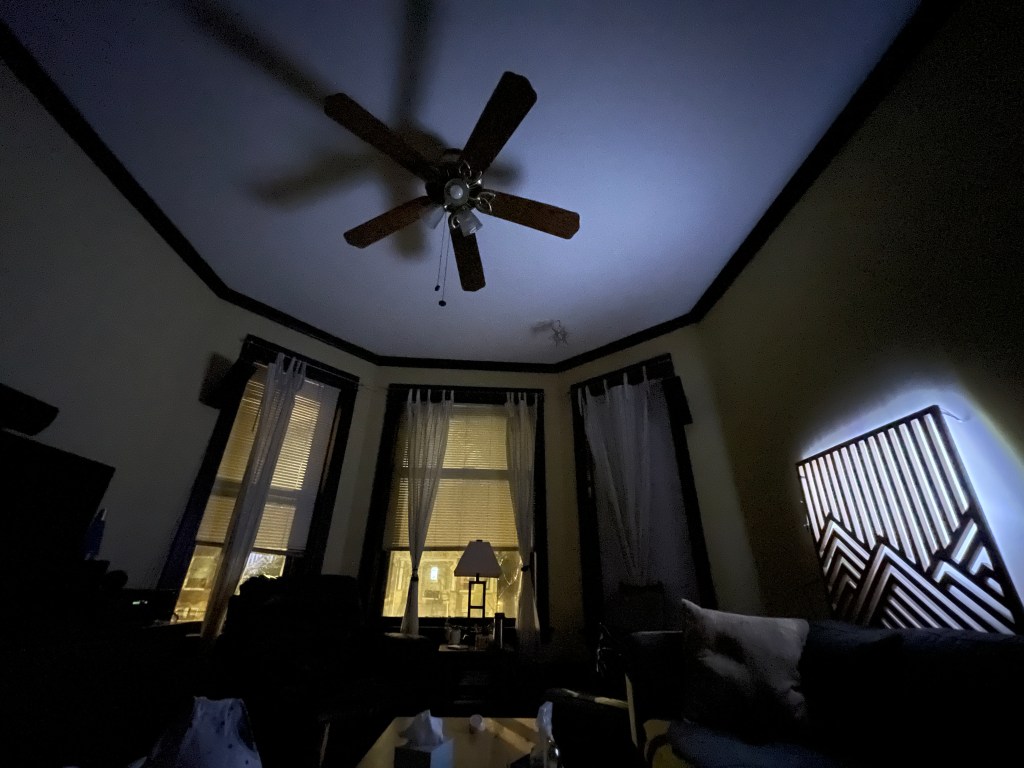
- Primary Objective: Create an aesthetically pleasing light fixture from wood utilizing RGB LED ribbon found in a scrap pile.
- Secondary Objective: Gain familiarity with Arduino. Review C++ programming, soldering, and circuit design to create a programmable control that changes light intensity and/or color over time or in response to the environment.
- Specific Goal: Combine technical skills and personal experiences into a singular artistic expression of form and function.
- Measurable and Achievable Goals:
- Research and finalize design concept
- Sketch and determine dimensions of wood parts
- Confirm length of LED ribbon is sufficient
- Create cut list and execute
- Install LED ribbon
- Create circuitry to supply power to LED ribbon from Arduino board
- Create program to test ribbon during soldering
- Solder connections
- Final coding to minimize memory requirements




Method:
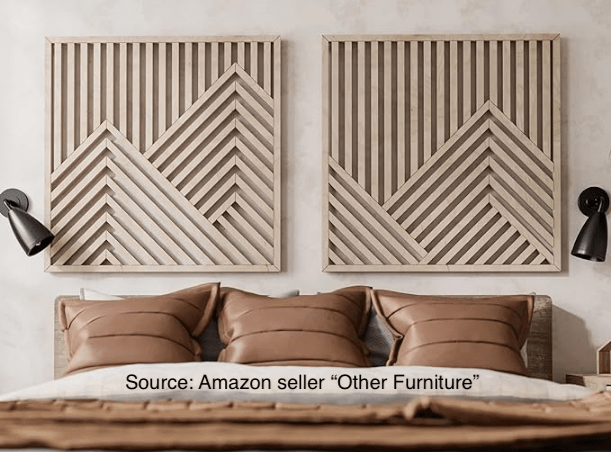
- Google image searches for “wood”, “art”, “wallhanging” returned several results that would be compatible with pieces of strait ribbon light
- One particular design resonated with my personal experience of backpacking on the Appalachian Trail
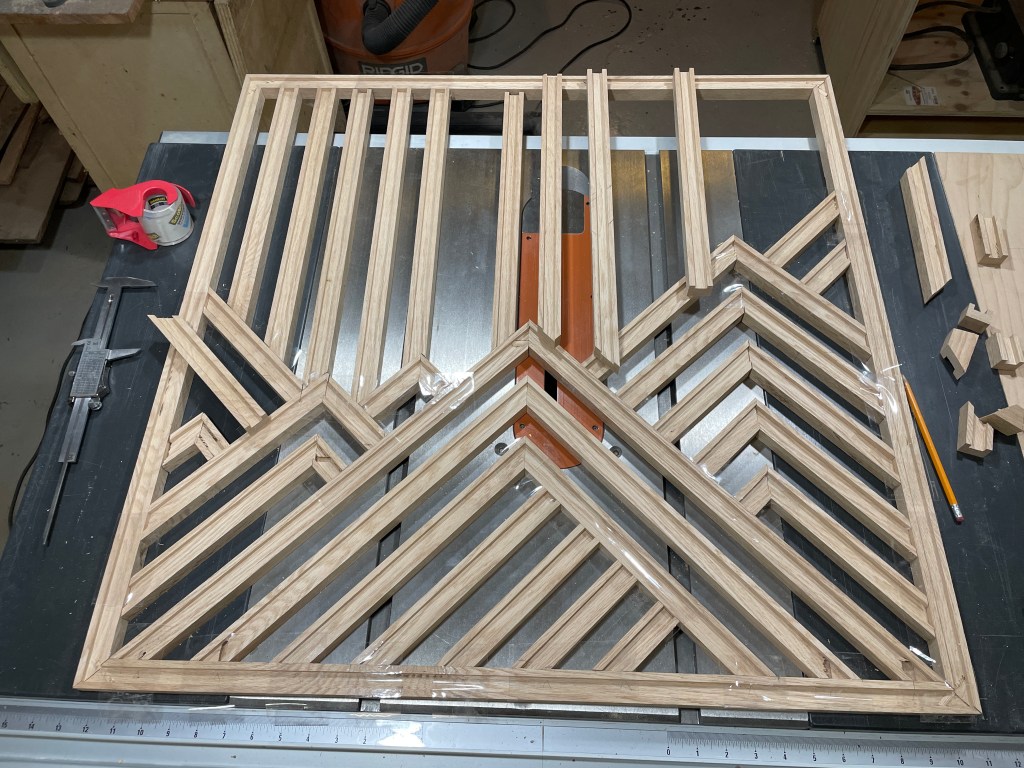
- Adapt design to personal taste; create cut-list and collect materials
- Decide to split the design into two lighting zones
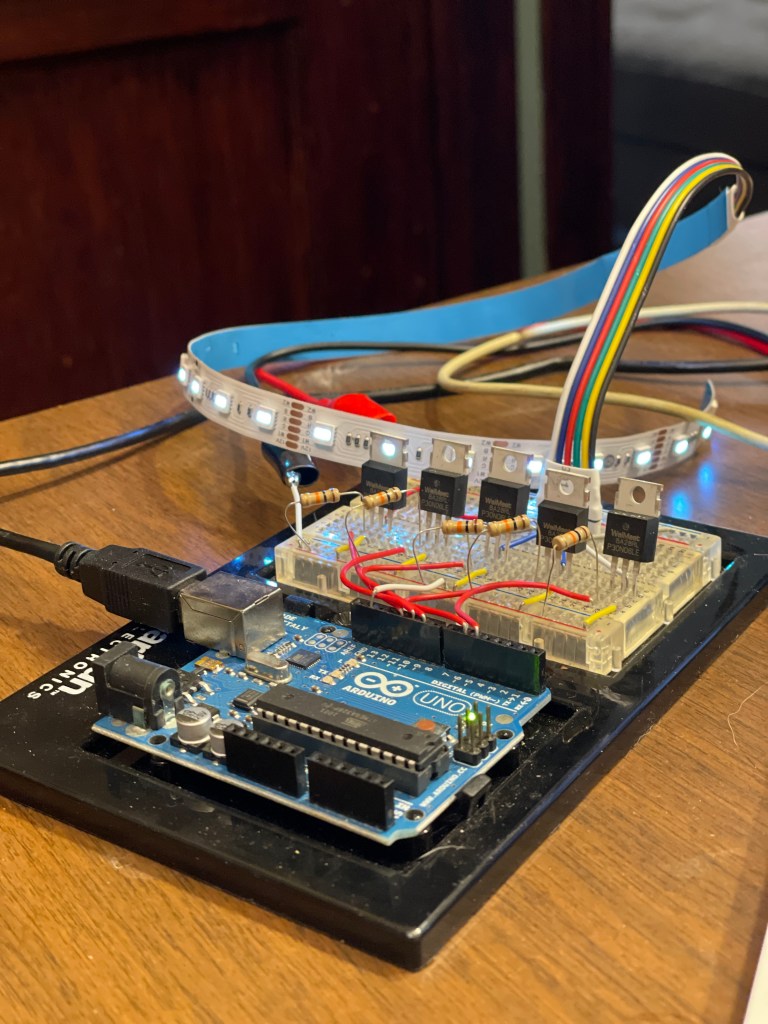
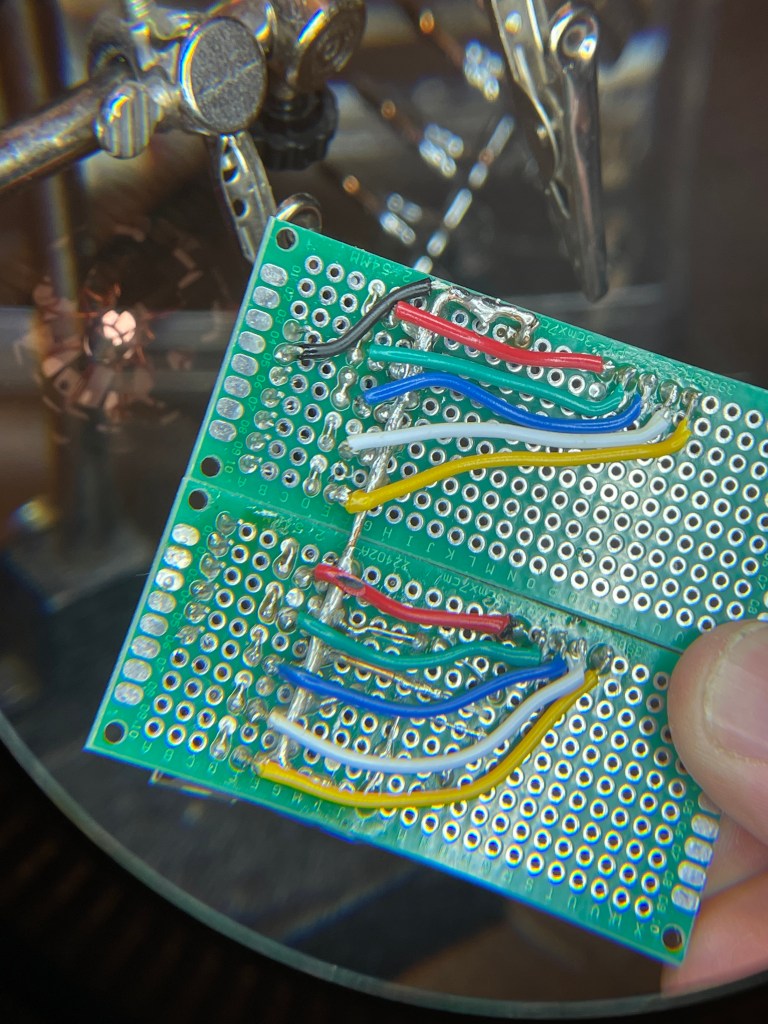
- Build an Arduino “shield” to supply power to ten color channels (RGB/WW/CW x 2 zones)
- Install LED ribbon and solder. Technique was vastly improved after 264 solder points.
- Finalize code approach to lighting design: “Mountain Time”
- The experience of time is subjective based on the purpose of the time-keeping. For instance, on holiday in Caribbean destinations, “Island Time” is a cheeky expression of how nothing seems to move quickly because nothing is quite as important when living and vacationing in paradise.
- Remembering the months I spent backpacking through the Northeast, the purpose of time-keeping was only useful to the extent that you make your destination before sundown (if desired). An approximation of the time of day was easy enough based on the sun’s position.
- “Mountain Time” being just an extension of the idea of “Island Time”, designing the lighting fixture to change throughout the day based on the time of day was decided upon.
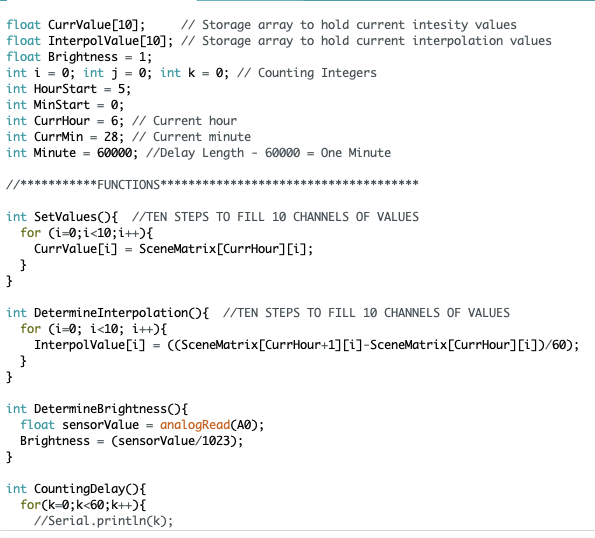
- A color and intensity palate was developed and stored in a matrix for each hour of daylight from 6am to 6pm.
- Borrowing on my experience in theatrical lighting design and programming, it was decided to achieve subtle light changes, like sun movement and color changes. Additionally, it was determined that light should change every 60 seconds, by 1/60th of the overall change in color and intensity between the hours.
- Information for the current light settings is taken from the previous and next hour, then incremental interpolation calculated from a loop counter.
- After many friends had spent several hours in the room with the fixture over many different days, I finally asked each one if they noticed that the colors and intensities changed, and each answered “no”. I took this as a success, that the changes were not distracting to viewers, and that the overall intent of time-keeping was maintained as approximate and only as relevant as a viewer requires.




 Collection of Found Objects
Leave a comment